IV. Husbandry at a Glance
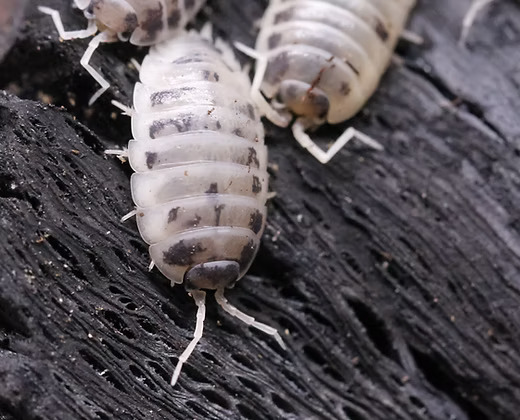
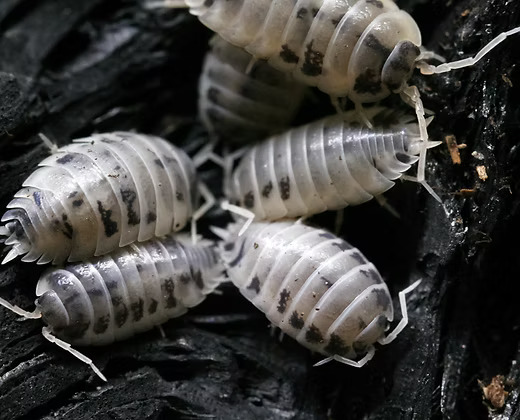
The Dairy Cow is a bold black and white captive morph of Porcellio laevis, one of the largest and most vigorous terrestrial isopods commonly kept in the hobby. Native to parts of Europe and North Africa, the species itself is highly adaptable and has established populations across multiple continents through human movement. The Dairy Cow morph is prized not only for its striking contrast pattern but also for its fast growth, strong feeding response, and remarkable resilience. It represents an ideal foundation species for beginners while remaining useful and impressive in advanced bioactive systems.
Distribution & Habitat
Porcellio laevis is naturally distributed across Western Europe and Mediterranean regions, where it occupies a wide ecological range. It is commonly found beneath stones, within compost piles, along woodland edges, and in agricultural environments where organic matter is abundant. Its tolerance for fluctuating humidity and temperature has allowed it to spread well beyond its native range. The Dairy Cow morph, however, does not occur in the wild and exists exclusively as a selectively maintained captive line. In captivity, the species thrives in enclosures that replicate its natural preference for decomposing plant matter, moderate warmth, and access to both moist and drier microclimates.
Morphology & Identification
Porcellio laevis is characterised by a smooth, glossy dorsal surface that lacks the pronounced granulation seen in species such as Porcellio scaber. The body is broad and slightly elongated, with well defined segmentation and visible uropods extending beyond the rear margin. Adults reach approximately 18 to 25 millimetres in length, making them notably larger than many beginner species. The Dairy Cow morph exhibits a stable black and white pattern, typically with irregular dark patches across a pale base. Individual patterning varies, but the contrast remains genetically consistent when the line is maintained in isolation. Unlike conglobating genera such as Armadillidium, this species cannot roll into a complete ball and instead relies on speed and partial curling as a defensive strategy.
Behaviour & Temperament
The Dairy Cow is among the most active and visible isopods kept in captivity. Individuals frequently explore open areas and demonstrate a confident feeding response when food is introduced. Their movement is fast and deliberate, and they recover quickly after disturbance. Compared to more reclusive collector species, Porcellio laevis is consistently observable, making it particularly rewarding for keepers who enjoy watching colony dynamics. They possess a strong protein drive and will actively scavenge organic material, including shed reptile skin and leftover feeder insects in bioactive enclosures. While generally peaceful within their own species, they may outcompete slower isopods in mixed setups if resources are limited.
Breeding & Reproduction
Porcellio laevis is prolific and reliable in reproduction. Females carry broods internally before releasing fully formed mancae, typically numbering between fifteen and thirty per clutch. Under stable temperatures and adequate nutrition, growth rates are rapid and multiple generations overlap within a short period. Colonies can expand significantly within several months, particularly when provided with consistent moisture gradients, protein supplementation, and readily available calcium. Sexual maturity is reached relatively quickly compared to many other terrestrial isopods, which contributes to the species’ reputation for explosive colony growth. With proper management, a modest starter group can develop into a dense and stable population within a year.
Colour Morphs & Variants
While not as morph diverse as Porcellio scaber, Porcellio laevis has produced several recognised captive lines through selective breeding. The Dairy Cow morph remains the most iconic due to its high contrast pattern and strong visual presence. Other variants include Milkback, Orange, Caramel, and selectively bred high white expressions. Morph stability is generally strong when lines are kept isolated, though cross breeding between morphs can dilute pattern clarity. Continued selective breeding efforts within the hobby aim to refine contrast, increase size consistency, and stabilise distinctive markings across generations.